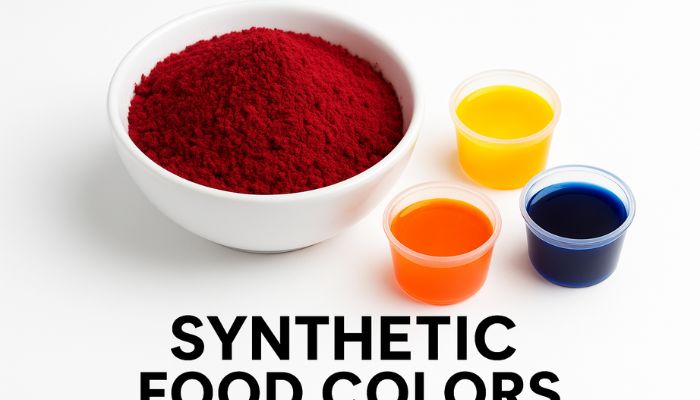
Finding a Certified Synthetic Food Colors manufacturer in Spain involves evaluating product quality, regulatory compliance, technical documentation, and supplier reliability. Spanish food businesses need to ensure that selected colourants meet applicable European Union food additive requirements and suit their intended applications.
Searching for a Certified Synthetic Food Colors manufacturer in Spain is a crucial first step for food processing businesses seeking to balance visual appeal with absolute regulatory safety. Synthetic food colours are essential for achieving consistent shades and maintaining a recognisable brand image across batch runs. For Spanish manufacturers, importers, and regional ingredient distributors, selecting a partner requires evaluating pure specifications, end-use stability, and strict European Union compliance.
Why Food Businesses Need Reliable Synthetic Food Colour Suppliers
Food colourants directly shape consumer perception, influencing the visual appeal and batch-to-batch consistency of beverages, confectionery, baked goods, and processed savory items. However, colorants are strictly governed by regulatory limits, requiring precise application knowledge for every distinct food category.
Spanish food processors operating within the EU market demand clear documentation and dependable technical support from a Certified Synthetic Food Colors manufacturer in Spain. Working alongside an experienced manufacturer like Dycron Colourchem helps production teams quickly assess whether a specific dye or pigment aligns with their precise formulation parameters.
How to Evaluate a Certified Synthetic Food Colors Manufacturer in Spain
Evaluating a prospective global or regional supplier requires checking measurable quality criteria rather than relying on marketing promises.
- Regulatory compliance: Ensure the color additive is explicitly approved for your specific food category under EU legislation.
- Product documentation: Insist on technical data sheets (TDS), certificates of analysis (COA), and safety dossiers.
- Batch consistency: Verify the manufacturer’s testing protocols for shade strength, purity, and solubility.
- Application suitability: Check performance against heat, light exposure, pH shifts, and processing shelf life.
- Supply capability: Review minimum order quantities, packaging options, and export logistics.
These practical benchmarks ensure seamless coordination between procurement teams, quality control labs, and factory production lines.
Understanding European Food Colour Regulations
Spain enforces the European Union’s rigorous food additive framework. Regulation (EC) No 1333/2008 defines permitted uses and concentration conditions, while Regulation (EU) No 231/2012 outlines mandatory purity and identification specifications for authorized colors.
Commercially available dyes are not universally permitted across all product categories. Food labels across Spain must clearly display functional classes alongside specific names or E-numbers (such as E102 or E133). Thoroughly auditing regulations before purchasing prevents costly reformulations or compliance failures down the road.
What to Consider When Comparing Product Quality
Colour performance in an actual manufacturing environment depends heavily on physical variables. Factors such as water solubility, thermal stability, pH sensitivity, and ingredient interactions govern how a shade behaves over time.
For instance, soft drink formulators need high solubility and clarity, whereas confectionery makers prioritize heat endurance during cooking. Testing pre-production samples inside your own facility provides clearer insights than browsing product catalogs. Choosing a Certified Synthetic Food Colors manufacturer in Spain like Dycron Colourchem provides a dependable source for high-purity food dyes, offering technical support to ensure buyers select options perfectly tailored to their technical requirements.
Making an Informed Supplier Decision
A structured purchasing process combines regulatory verification, sample testing, and logistics analysis. Setting up a standardized evaluation checklist helps compare shortlisted partners on equal terms, building a resilient and transparent supply chain.
When finalizing a Certified Synthetic Food Colors manufacturer in Spain, evaluate long-term lead times, export documentation efficiency, and supplier responsiveness. Working with an established manufacturing partner streamlines cross-border logistics, ensuring consistent inventory replenishment and technical support for ongoing food production needs.
Quick Answer:
What Should Spanish Buyers Check First?
When evaluating a Certified Synthetic Food Colors manufacturer in Spain, immediately verify EU authorization for your specific product category. Next, review batch purity certificates, perform pilot trials for shade stability, and inspect supply capabilities. Always sample and test raw materials before issuing bulk purchase orders.
Frequently Asked Questions
How can businesses verify a synthetic food colour supplier?
Request official certificates of analysis, technical specifications, and evidence of compliance with EU food additive regulations. Cross-check all documentation against current regulatory databases.
Are all synthetic food colours permitted in Spain?
No. Only specific synthetic colorants authorized under EU legislation for explicit food categories and usage limits are allowed in Spain.
Why should manufacturers test food colours before ordering in bulk?
Pilot testing confirms shade accuracy, solubility, and color retention under actual processing temperatures and packaging conditions.
Exploring Synthetic Food Colour Options for Your Business
Ready to elevate your product line with high-purity, fully compliant shade solutions? Contact Dycron Colourchem today to request product samples, batch specifications, and technical documentation. Share your intended application and formulation needs with our technical team to find the exact color solutions for your business